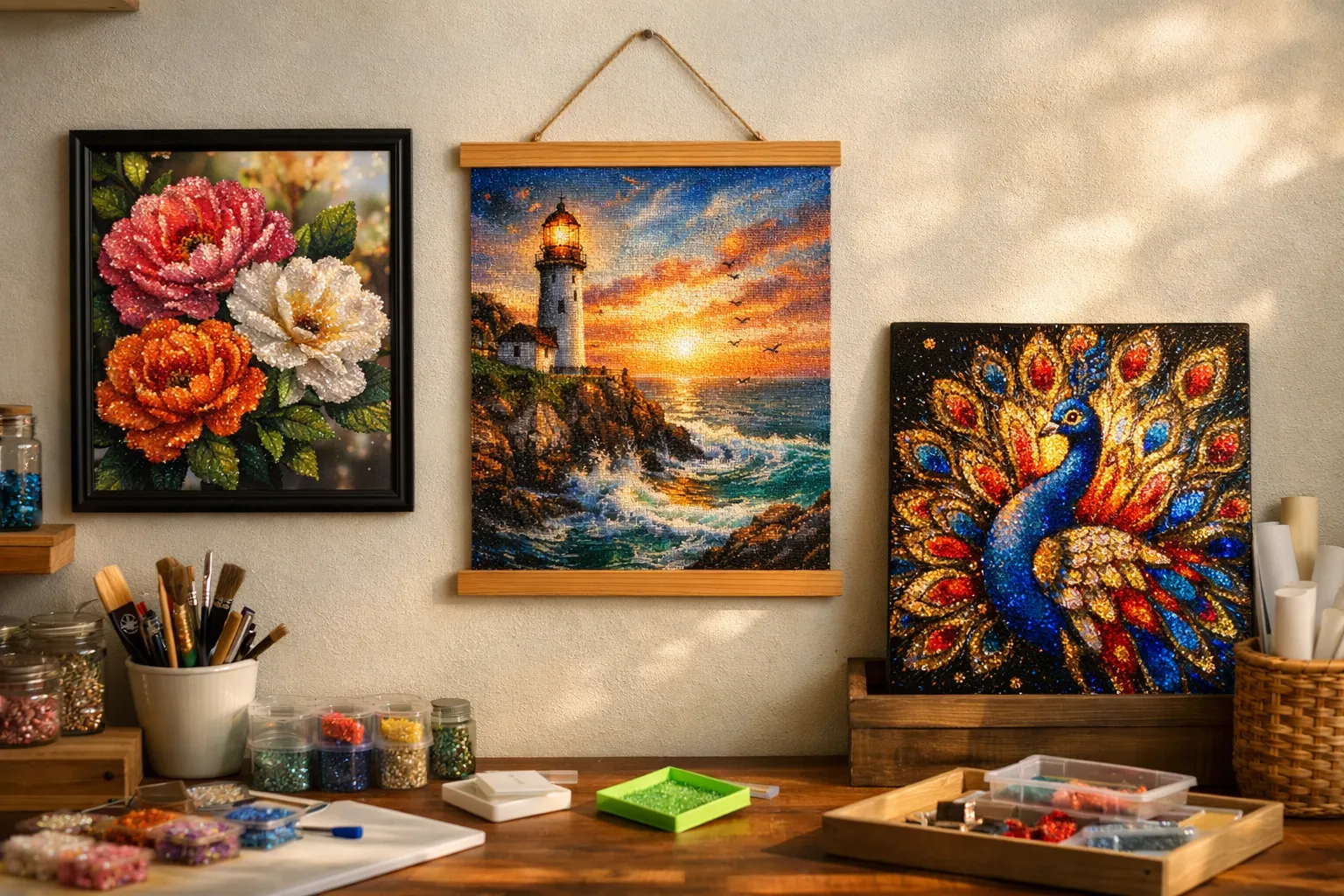
Roll it, seal it if it'll be handled, then decide where it goes: on the wall (framed or not), into flat storage, into a gift box, into another craft, or up for sale. Most finished diamond paintings end up framed or in a drawer. The ones that get enjoyed for years are the ones that were sealed and stored flat, and that costs about the price of a kit.
The finished-painting flowchart
Every path starts at the same two steps. After that, pick the branch that fits the piece.
Step 1 and 2: roll, then decide on sealer
Lay the canvas on a hard table and roll it in overlapping lanes in both directions so every drill is pressed into the glue. A 4.5-inch diamond painting roller does a 12x16 inch canvas in a minute or two. Pick off any drill that's crooked or upside down now, while it's easy.
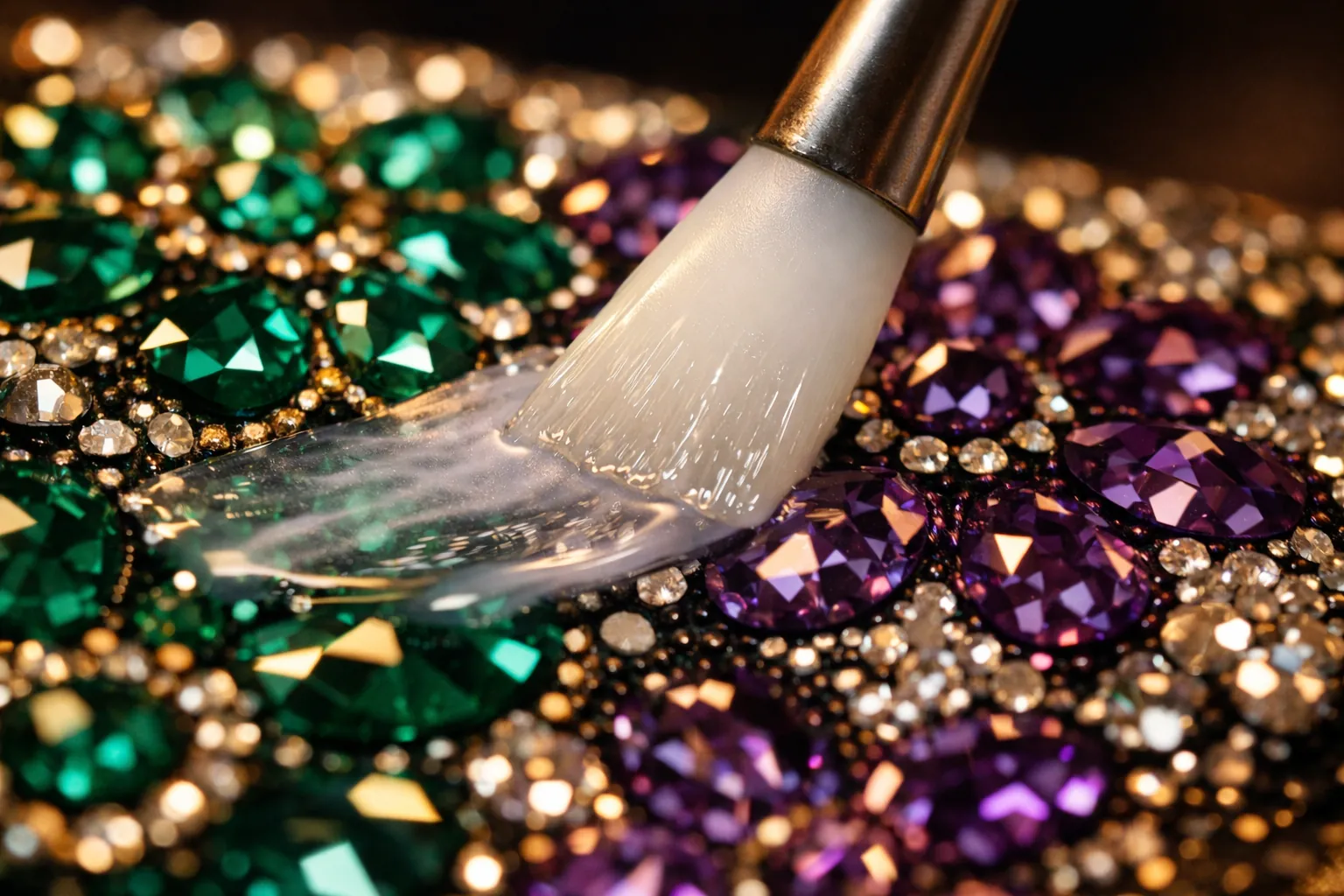
Sealer is a thin clear coat that glues loose drills in and fills the gaps where dust collects. You need it if the painting will hang without glass, be rolled, be mailed or be cut into something else. Behind glass, it's optional. Two options with large owner bases:
- LANBEIDE diamond painting sealer (200 ml, silicone brush): a PVA glue that the listing says goes on white and dries clear, needing at least 2 hours to cure depending on thickness and temperature.
- Mod Podge Diamond Top Coat: Plaid's version made for diamond art, which its listing says dries to a hard gloss finish and cleans up with soap and water.
Sealer changes the look slightly, since a gloss coat can dull the facets a little. Test it on a corner. Our sealer guide compares brush-on and spray types.
Put it on the wall
In a frame
A frame is the most durable option because glass or acrylic keeps dust and fingers off the drills. Measure the painted area, not the whole canvas: most kits have an unpainted border around the design. For the common 30x40 cm kit, a 12x16 inch frame fits the canvas uncut (its listing notes the opening is 0.5 inch smaller to hold the edges), or trim the border and use a 10x14 inch frame, which has more than 11,000 ratings. Mats and deep frames are covered in how to frame diamond art.
Without a frame
Seal it first, since nothing protects the face. Then a magnetic poster hanger, foam board or a stretched canvas will hold it straight. Our guide on how to hang diamond art without a frame ranks five methods by cost and how long they last.
Store it flat
Painters who finish a kit a month run out of wall fast. Flat storage keeps the drills from rubbing and the canvas from creasing. The A3 diamond painting storage book has 30 clear sleeves at 16.5 x 12.1 inches, which its listing says fits standard 40x30 cm canvases (60 views if you use both sides).
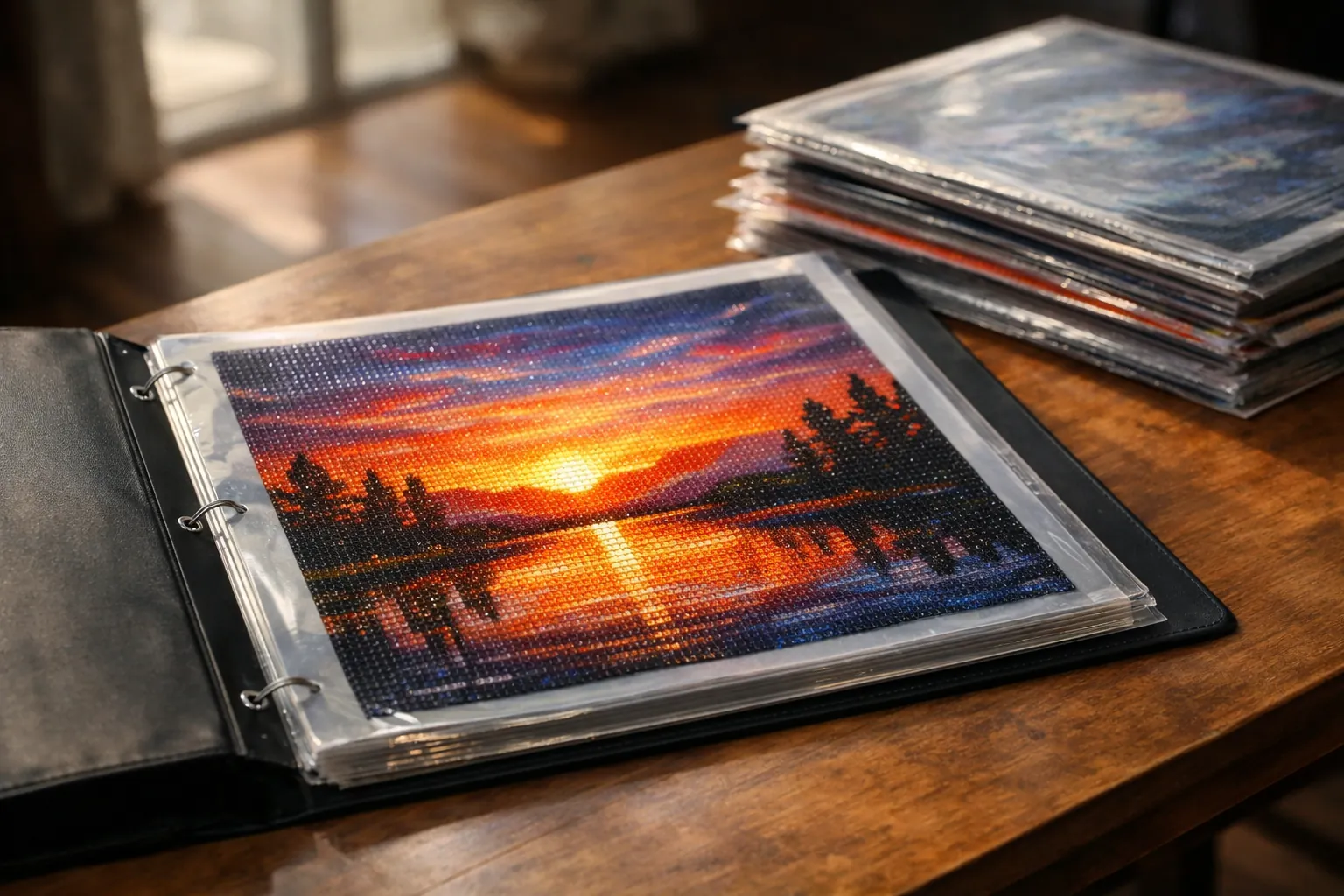
Bigger canvases have to roll. Seal first, roll loosely with the drills facing out around a wide tube (a poster tube or a wrapping-paper core), and wrap it in tissue. Drills facing in press against each other and pop off. Never fold a finished canvas. For storing kits in progress and loose drills, see diamond painting storage.
Give it away
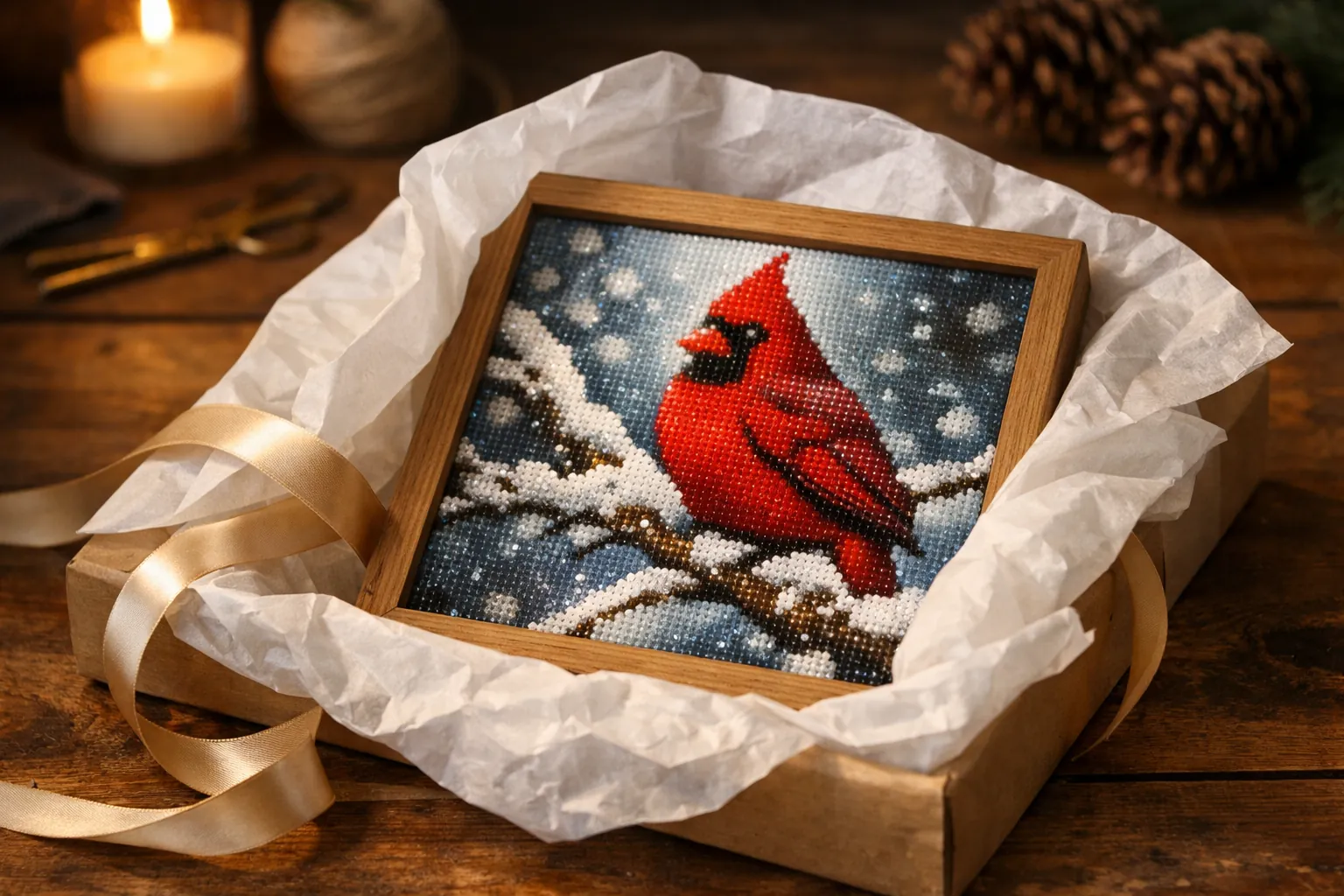
A finished painting makes a personal gift, especially a pet, a family photo kit or a scene with meaning to the person. Frame it if you can, because most people won't get around to framing it themselves. If you're mailing it unframed, seal it, roll it drills out and send it in a tube. A note on the back with the date and how many hours it took is a nice touch, and our diamond painting calculator will tell you the drill count if you don't know it.
Turn it into something else
Small canvases and practice pieces work well as other things once they're sealed and backed with card or felt:
- Greeting cards: glue a sealed square onto card stock.
- Box lids or notebook covers, with a coat of sealer over the top.
- Ornaments and bookmarks from offcuts, backed with felt.
Seal before you cut, or the drills along the cut edge fall off. If you have spare drills left over too, our leftover drills guide ranks projects that use them up.
Sell it
People do sell finished diamond paintings at craft fairs and online, but check the artwork first. Many kit designs are licensed or copied artwork, and reselling those can cause trouble for you. The cleanest pieces to sell are custom kits made from your own photos or designs the seller says you may sell. Price for the frame and your hours, not the kit, and state the size and drill shape in the listing.
What to buy for finished pieces
A short list for anyone finishing more than a kit or two a year:
- A roller: sponake 4.5-inch roller
- A sealer: LANBEIDE 200 ml with brush
- A frame for the size you paint most: 12x16 inch frame
- Flat storage for the rest: A3 storage portfolio
If you only buy one thing, buy the roller. It's the step people skip, and a loose drill is the start of every finished painting that later sheds. The rest of the basics are in our tips for beginners.
Product details come from each seller's Amazon listing, checked October 3, 2026. Prices change often, so the links show the current price on Amazon. How we research · Affiliate disclosure