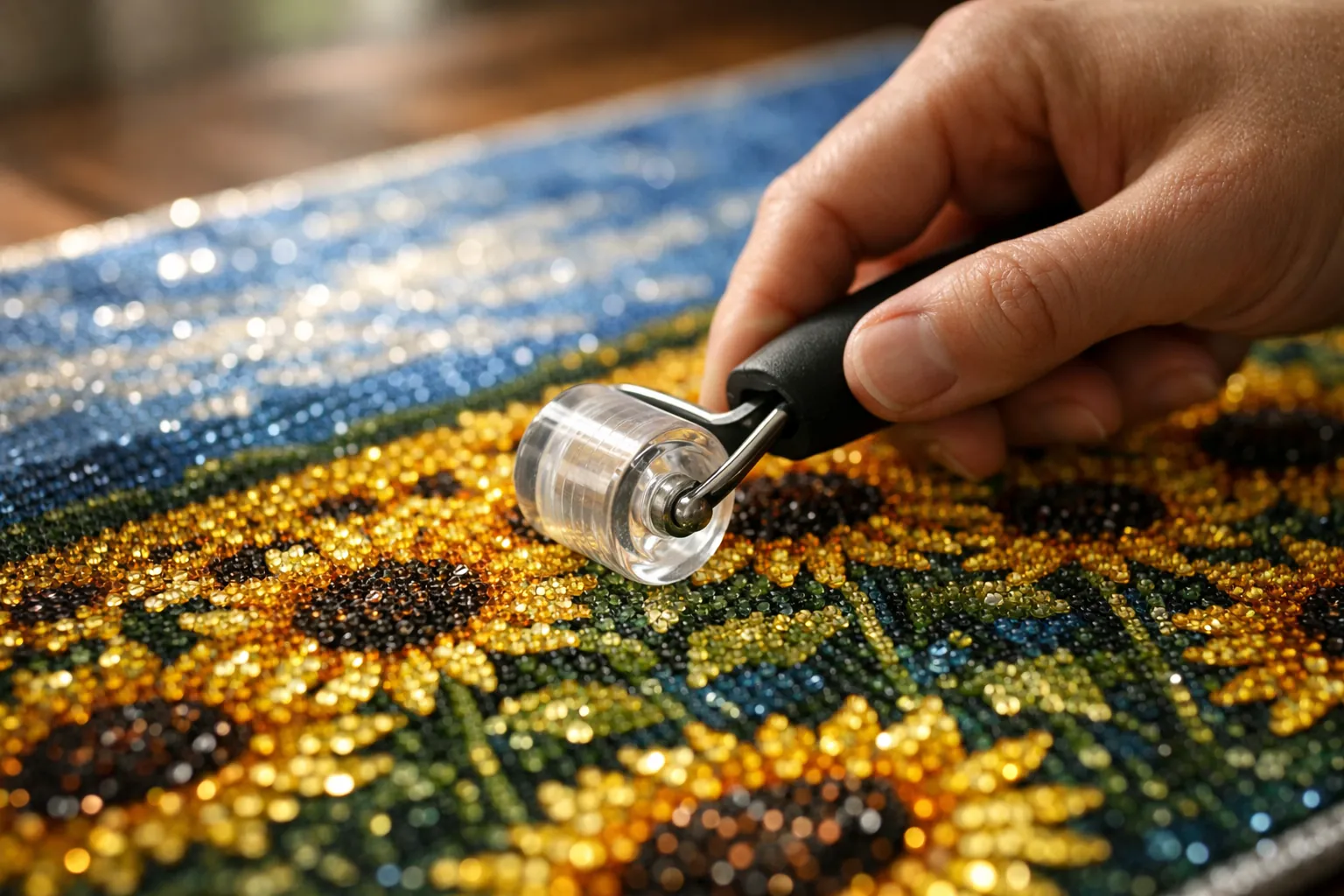
Buy a purpose-made roller with a smooth, hard wheel about 4 inches wide. The 5D diamond painting roller is the one most people get, and more than 2,700 buyers rate it 4.8 stars. For bigger canvases, the sponake roller has a wider 4.5-inch wheel.
Rolling is dull work. Drills pop off without it, though, the moment you roll the canvas up for storage. Sealing and framing knock them loose too.
Quick picks
| Best overall | 5D Diamond Painting Roller | Amazon |
|---|---|---|
| Best wide wheel | sponake Diamond Painting Roller | Amazon |
| Best for square drills | UNIME Roller and Fix Tool (2 pack) | Amazon |
| Best brayer alternative | AKIRO 4-Inch Rubber Brayer | Amazon |
Once the canvas is rolled and sealed, the best diamond painting frames guide covers how to display it.
How we picked
A roller is a simple tool, so the shortlist came down to two things: how many owners have rated it on Amazon (our picks have between 1,000 and nearly 9,000 ratings as of October 3, 2026, alongside recent sales), and the wheel's width and material as each seller lists them. Extras like a fix tool for straightening rows counted in a roller's favor.
This is a "How we pick" guide. We didn't roll a canvas with these; the picks come from the listings and from Amazon's sales and rating figures. How we research.
Wheel width: how many passes it takes
The 4 best diamond painting rollers
5D Diamond Painting Roller
More than 2,700 ratings at 4.8 stars, and about 1,000 more bought last month. It's the purpose-made roller to beat. The wheel is smooth PC and the handle is widened, so pressing evenly takes little effort. It's also light enough that you'll actually use it every session.
- Wheel3.7 in (9.4 cm), PC
- Handle4.72 in, PP, widened
- Weight3.17 oz
Why it stands out
- 4.8 stars from 2,700+ ratings
- Easy to control
- Inexpensive
Think twice if
- Narrower wheel means more passes on big canvases
sponake Diamond Painting Roller
Pick this one if your kits are 16x20 or panoramic. Its 4.5-inch wheel covers more canvas per pass than the 5D's, and the seller says the wheel surface won't dull the drills' shine. Same 4.8-star average, from more than 1,000 buyers.
- Wheel4.5 in (11.5 cm), PC
- HandlePP
- Usefull-drill 5D paintings
Why it stands out
- Wider wheel, fewer passes
- 4.8 stars
- Light and simple
Think twice if
- Slightly less nimble in tight corners
UNIME Roller and Fix Tool (2 pack)
Square drills drift out of line, and a roller alone won't fix that. This 2-pack adds a flat fix tool for nudging rows straight before you roll them down. More than 1,600 buyers rate it 4.6 stars.
- Roller4.5 in (11.5 cm) wheel, PC
- Fix tool5.51 x 3.94 in (14 x 10 cm)
- MaterialPP and PC
Why it stands out
- Fix tool for straightening rows
- Wide wheel
- 1,600+ ratings
Think twice if
- Fewer recent sales than the others
AKIRO 4-Inch Rubber Brayer
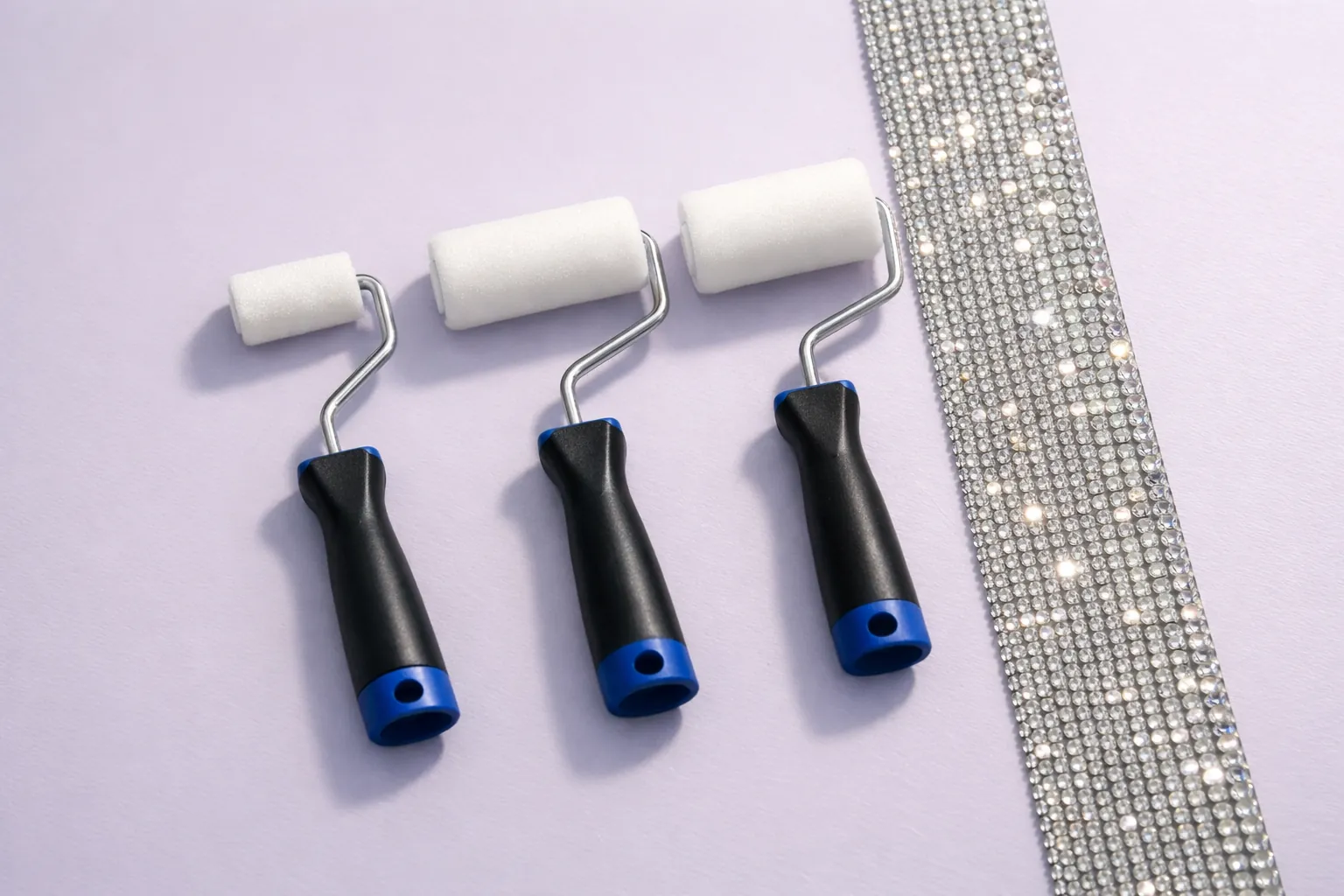
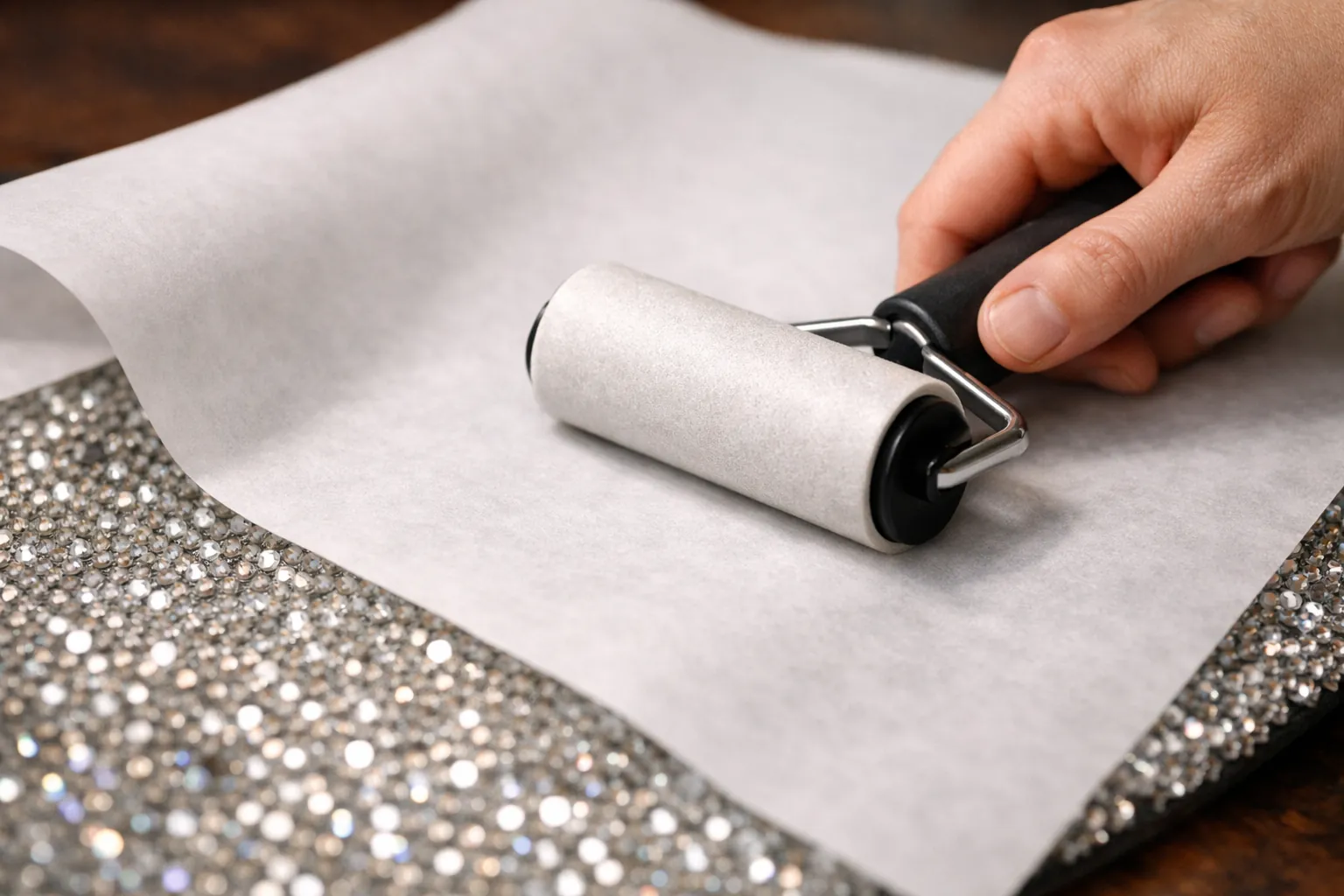
Printmakers use this to ink blocks. It was never meant for diamond painting, yet the rubber drum and metal frame make it a sturdy, comfortable roller. If you do other crafts you may already own one. It has nearly 9,000 ratings and sold about 3,000 last month. Roll over release paper so the rubber stays clean.
- Roller4 in rubber drum
- Overall5.9 x 3.9 in
- Framemetal bracket, plastic handle
Why it stands out
- Nearly 9,000 ratings
- Sturdy metal frame
- Useful for other crafts
Think twice if
- Rubber can pick up wax and dust: use release paper
Side-by-side comparison
| Roller | Wheel width | Wheel material | Extras | Rating |
|---|---|---|---|---|
| 5D roller | 3.7 in | PC | None | 4.8 (2,729) |
| sponake | 4.5 in | PC | None | 4.8 (1,067) |
| UNIME 2-pack | 4.5 in | PC | Fix tool | 4.6 (1,682) |
| AKIRO brayer | 4 in | Rubber | None | 4.7 (8,956) |
From Amazon listings checked October 3, 2026. You may already own a roller: the Ratukall light pad kits and the screw-tip multi-placer pen kit include one.
How to roll a diamond painting
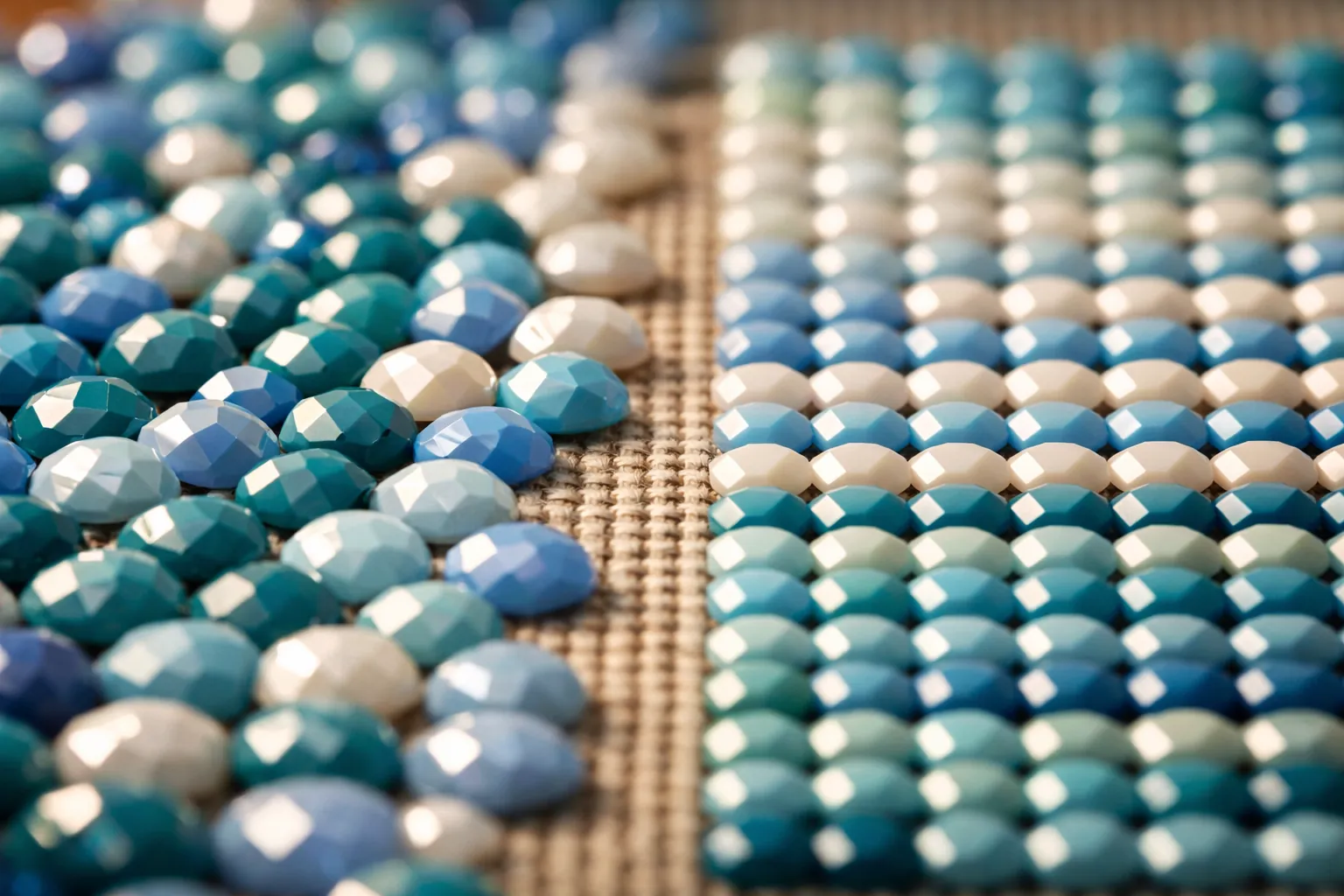
- Fix crooked or missing drills before you roll. With square drills this matters most, because rolling locks the rows where they are.
- Put the canvas on a hard, flat surface. A soft tablecloth soaks up the pressure.
- Roll in one direction along the rows with firm, even pressure, then make one pass across.
- Overlap each pass a little so no strip gets missed.
- Roll each section as you finish it. Otherwise your hand knocks loose drills off later.
- Before sealing or framing, roll the whole piece once more.
No roller? What works instead
| Household option | How well it works | Watch out for |
|---|---|---|
| Rolling pin | Good on large areas; even pressure | Wipe it clean; avoid flour or oil transferring |
| Heavy book on top | Fine for small sections, overnight | Doesn't press as firmly as rolling |
| Palm of your hand | OK for a few rows | Uneven pressure; skin oils on drills |
| Glass jar or bottle | Works in a pinch | Can slip; press gently |
All of these work. Still, a purpose-made roller costs little, and its handle makes firm, even pressure far easier over a whole canvas.
Rolling a large canvas
On a 27.5-inch panorama or a 16x20 inch kit, roll each finished section at the end of every session rather than waiting until the end. That way the finished part can be rolled up (drills facing out) without shedding. When the whole piece is done, lay it fully flat on a hard floor or a cleared dining table and roll it in overlapping lanes, first along the length and then across. A wider wheel, like the 4.5-inch sponake or UNIME, saves noticeable time here. See our large kit guide for more setup tips.
When rolling goes wrong
- If drills shift sideways, you're pressing at an angle. Keep the handle upright and roll straight along the rows.
- Drills sticking to the roller means wax on the wheel. Wipe it with a damp cloth and dry it.
- Some drills still pop up? The glue under them may be dusty or dry. Lift them out and dab the spot with a very thin layer of clear craft glue. Put the drills back, then roll again.
- Wavy square rows after rolling: next time, straighten them with a fix tool first, then roll. More on fixing rows in our guide to straightening drills.
Roller care
Wipe the wheel after each project. Wax and glue build up on it, lint sticks to that, and all of it transfers to the next canvas. Store the roller wheel-up or hanging so the wheel stays round and clean. Rubber brayers are dust magnets; keep yours in a bag between uses.
What to look for
A smooth, hard wheel
Purpose-made rollers use hard PC wheels that roll smoothly over faceted drills. Soft rubber works too but collects lint.
Width for your canvases
Around 3.7 inches gives you control in corners. On big kits, 4.5 inches is faster.
A comfortable handle
You'll press firmly across tens of thousands of drills. A wide handle spreads the pressure across your palm.
Extras for square drills
If you paint square drills, a fix tool or metal straight edge is as useful as the roller. See square vs round.
Complete your kit
- Pre-cut release paper to roll through.
- Topwey sealer after rolling.
- benote wax pen with a row-straightening plate.
Open the UNIME listing to see the fix tool's shape
Which roller to buy
For everyday kits, buy the 5D roller. Move up to the sponake once you start on panoramas. If you paint square drills, buy the UNIME roller and fix tool and straighten before every roll.
Whichever you get, the next step after the final roll is the sealer, then the frame.
Dimensions and materials are as each seller lists them on Amazon; sales and rating numbers were read from the same listings on October 3, 2026. Prices change often, so the buttons above show the current price on Amazon. How we research · Affiliate disclosure