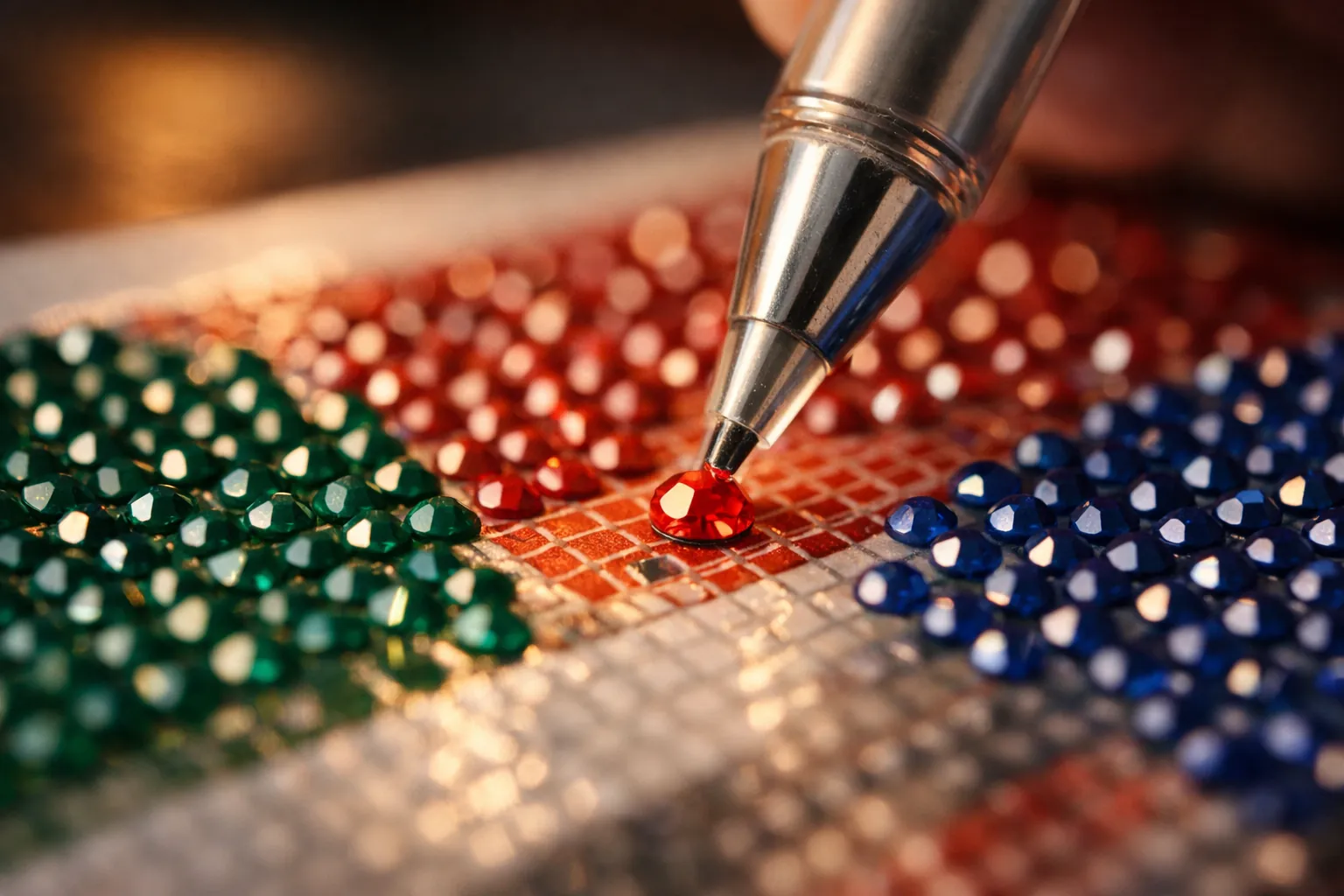
When drills won't stick, the glue is usually dusty or dried out, not "bad". Cover what you're not using, pick off hair and lint with tweezers, and only then reach for glue: a thin coat of clear diamond painting adhesive on dead patches, or a dot of precision glue on single drills that keep popping. Drills that fall off later are a different problem. They need a roller, not more glue.
Diagnose it first: cause and fix table
Find the row that matches what you see. Fixes go from gentlest to strongest, so try the first one before the second.
| What you see | Likely cause | Try first | If that fails |
|---|---|---|---|
| Drills slide or won't grab in one exposed area | Dust, hair or lint on the glue | Lift debris with tweezers; cover the area when you stop | Thin coat of clear glue on that patch |
| Whole canvas feels dry, not tacky | Glue dried out: old kit, or film left off | Work in small uncovered sections so new glue is fresh | Clear glue section by section |
| Drills stick to the pen and won't release | Too much wax on the tip | Wipe the tip; use less wax | Fresh wax square; try a different pen tip |
| Shiny smears on the canvas, drills slip | Wax transferred onto the glue | Press the drill firmly and roll | Dot of glue on those cells |
| Everything is weakly tacky in winter | Cold room | Paint in a normally heated room | Let the canvas sit at room temperature before you start |
| Drills placed fine but fall off later | Not pressed in, or sitting on a crease | Roll every finished section | Glue single drills; flatten the canvas |
| Drills won't stick on a patch you sealed | Sealer coated the glue | Glue single drills there | Thin clear glue on the patch |
Built from the problems painters ask about most. Brand-store guides list fixes; this table is ordered so you don't reach for glue when a pair of tweezers would do.
Dust and dried glue
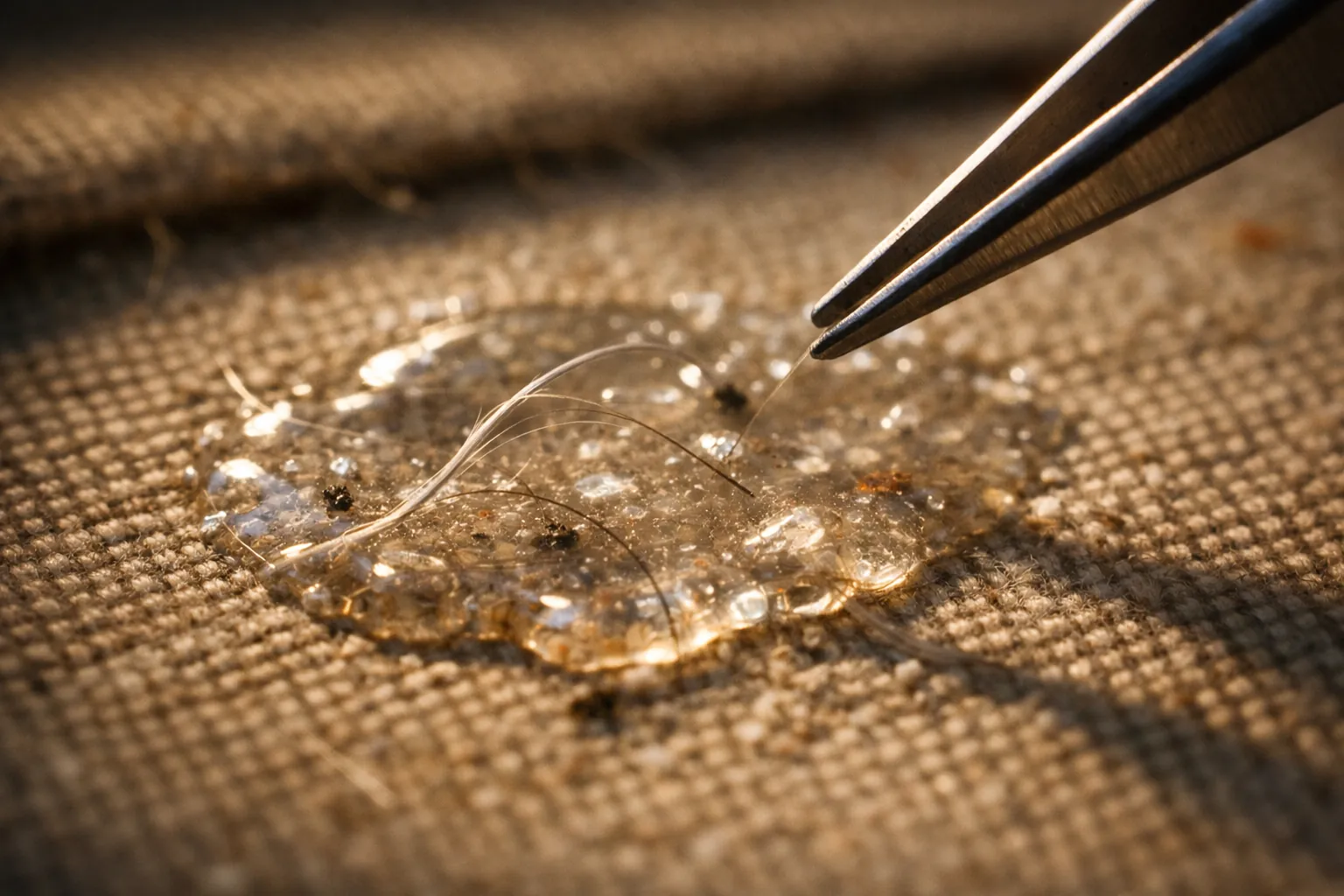
Diamond painting glue is pressure-sensitive, like the glue on a sticky note. It stays tacky for months under the film, and it stops working fast once it's open to the room. Every hair or speck of dust sits between the drill and the glue. That's why the single best prevention is boring: peel back only a few inches of film at a time, and cover the rest, every time you stop.
If the film is torn or you cut it away, cover exposed glue with non-stick release paper. The ARTDOT 200-piece release paper pack is double-sided, so there's no wrong way up, and also includes a small scraper, according to its listing.
To clean a dusty patch, lift visible hairs and lint with tweezers. Avoid wiping the glue with a cloth or a damp wipe. Both leave fibers and moisture, and you'll end up with a patch that's worse than before.
Making a dead patch sticky again
When a cleaned patch still won't hold, add glue. Use a clear, water-based adhesive and put on as little as you can.
- Test on the unpainted border first, so you know how long it takes to turn tacky.
- Brush or dab a very thin layer on the dead cells only. A thick layer makes drills skate and leaves haze between them.
- Wait until it's tacky rather than wet. Placing drills into wet glue lets them drift out of line.
- Place the drills and roll the area.
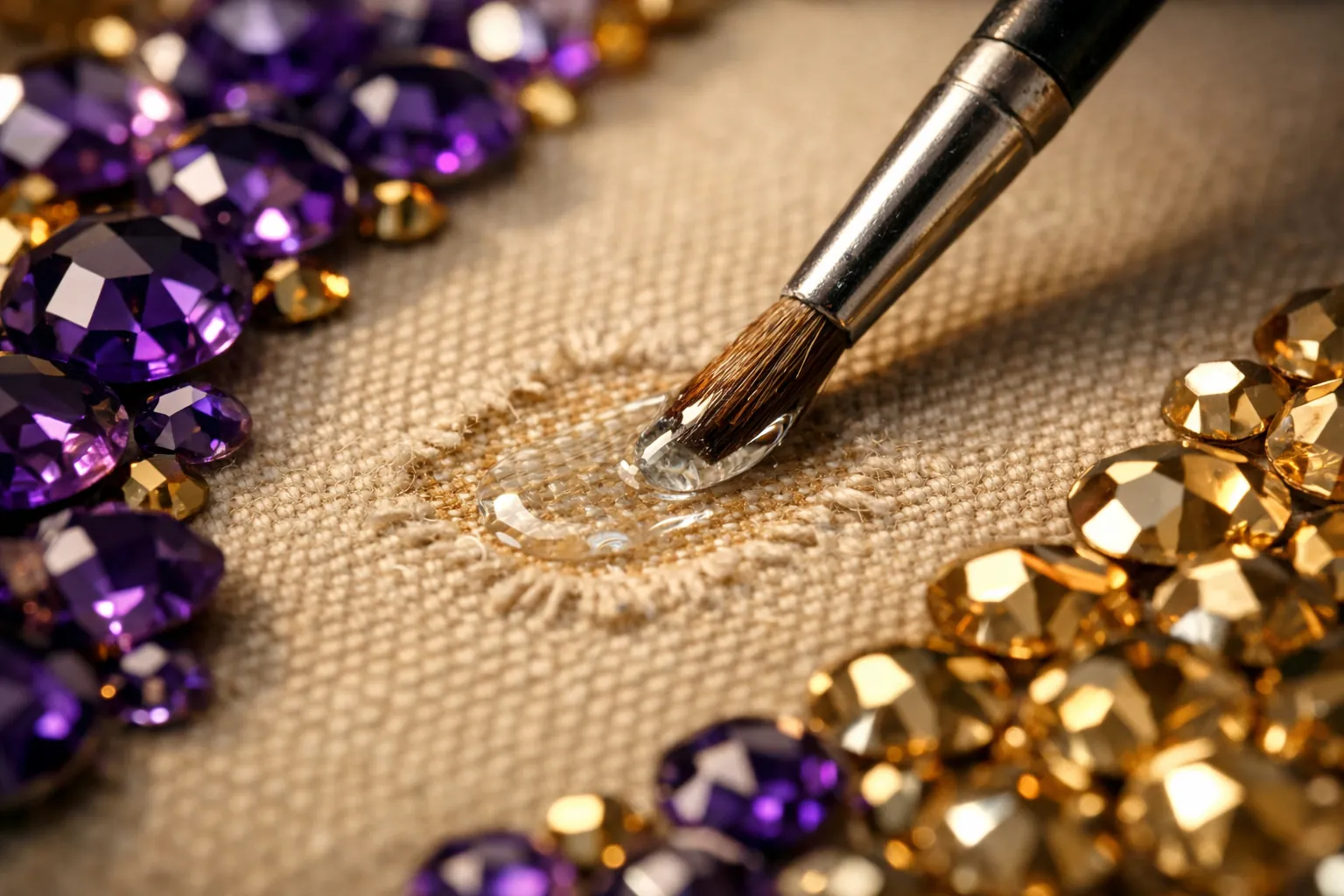
The Diamond Dotz Stick Adhesive is sold for exactly this. Its listing describes a 4 oz water-based gel that dries transparent and is "suitable for fixing loose drills" or covering larger areas. It has 4.7 stars from more than 1,200 ratings. Read the label for drying time, because the listing doesn't give one.
Drills that pop off later
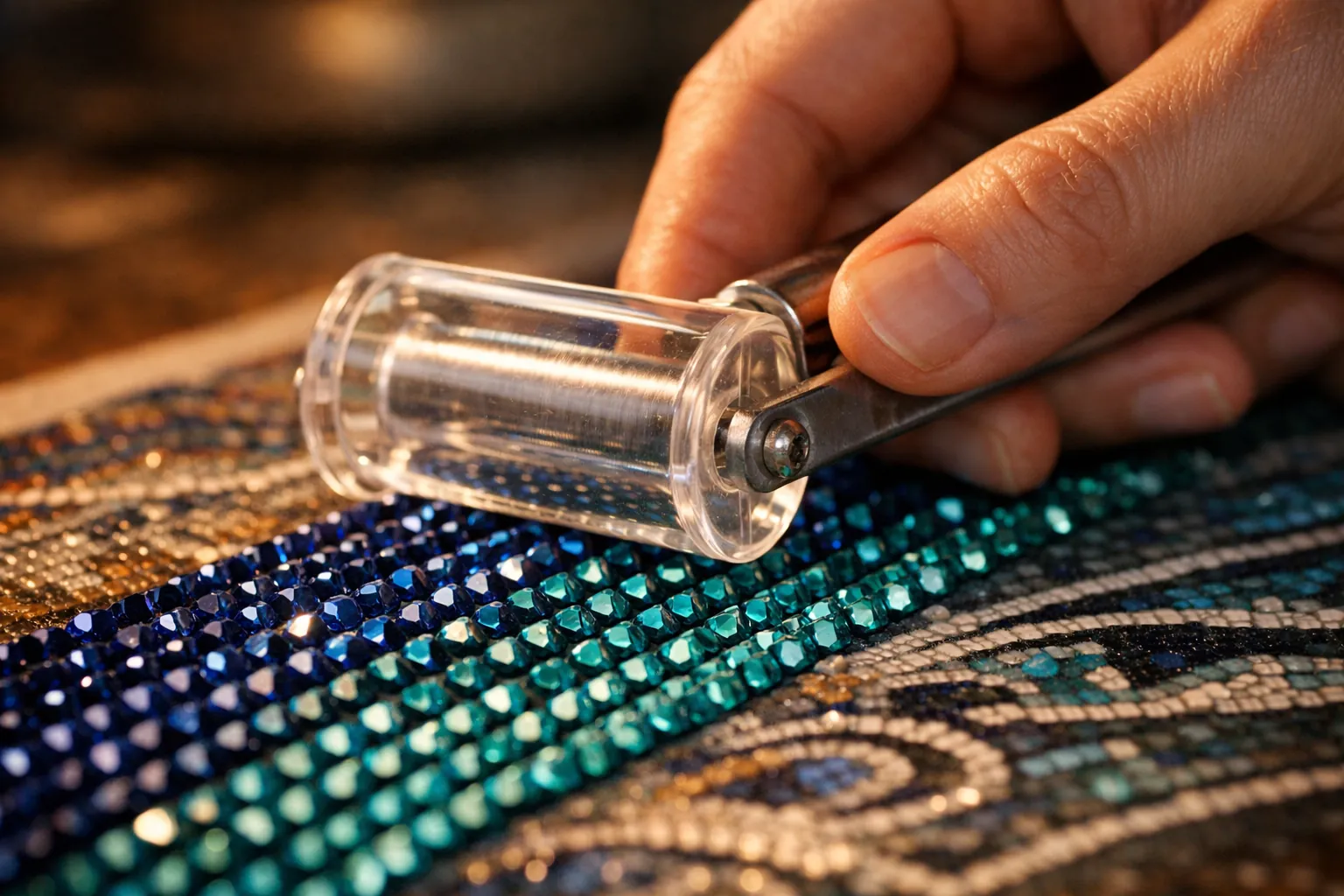
A drill that sticks and then falls off a day later almost always wasn't pressed in. The pen sets it on top of the glue, and a light touch doesn't seat it. Roll every section you finish with a diamond painting roller, pressing firmly on a hard table. Creases are the other cause. Drills on a raised fold sit at an angle and work loose, so flatten the canvas before you paint that area (see how to flatten a diamond painting canvas).
For a handful of stubborn drills, glue them one at a time. B7000-type glue comes in small tubes with a needle tip that puts down a dot about the size of a drill. The FITTDYHE B7000 glue (50 ml, precision tip) showed around 30,000 bought in the past month and 10,000+ ratings when we checked. Its listing gives a surface drying time of 5 to 10 minutes and a full cure of 24 hours, best at 48. The listing doesn't give safety details, so read the warning label on the tube, use it with a window open and keep it away from kids.
Gluing every drill isn't practical, and sealing is the fix for a whole finished canvas. Our sealer guide covers when it's worth doing.
Wax and pen problems
The pen picks up drills with a little wax in the tip. Too much wax and two things go wrong: the drill clings to the pen instead of the canvas, and wax rubs off on the glue, where nothing will stick to it. Press the tip into the wax lightly, and when the wax gets fluffy or full of lint, switch to a fresh piece. A pack like the FEBSNOW 60-piece glue clay set (2 x 2 cm squares, 5,000+ ratings) costs little enough that you can swap often. Our pen guide covers tips that need less wax.
Cold rooms and old kits
Pressure-sensitive glue loses tack when it's cold. A canvas that just came in from an unheated porch or a cold car will feel dead and recover once it's back at room temperature. Don't use a hair dryer or iron to warm it. Heat can soften the film and dry the glue, which is the opposite of what you want.
Kits that sat in a closet for years are a different story. The glue may simply be past its best. Work in small sections, and keep clear glue at hand for the patches that won't hold.
What to buy to fix sticking problems
The cheap cart, in the order you'll need it:
- Release paper to keep exposed glue clean (prevention).
- A roller for drills that pop off later.
- Clear diamond painting adhesive for dead patches.
- B7000-type precision glue for single stubborn drills.
- Fresh wax squares if the pen is the problem.
If drills are missing rather than loose, that's a separate fix: see diamond painting missing drills. For everything else a first kit throws at you, our tips for beginners covers the basics, and the tools and accessories guide lists what's worth buying.
Product details and cure times come from each seller's Amazon listing, checked October 3, 2026. Always follow the glue's own label. How we research · Affiliate disclosure